Guides & road trips · Motorway transfer
Marrakech to Casablanca
Marrakech to Casablanca is 240 km and takes about two hours forty minutes by car. The whole route runs on the A7 motorway, a tolled dual carriageway with a 120 km/h limit and no mountain section. It is the flattest and fastest of the routes out of Marrakech.
- Distance
- 240 km
- Driving time
- 2 h 40
- Road
- A7
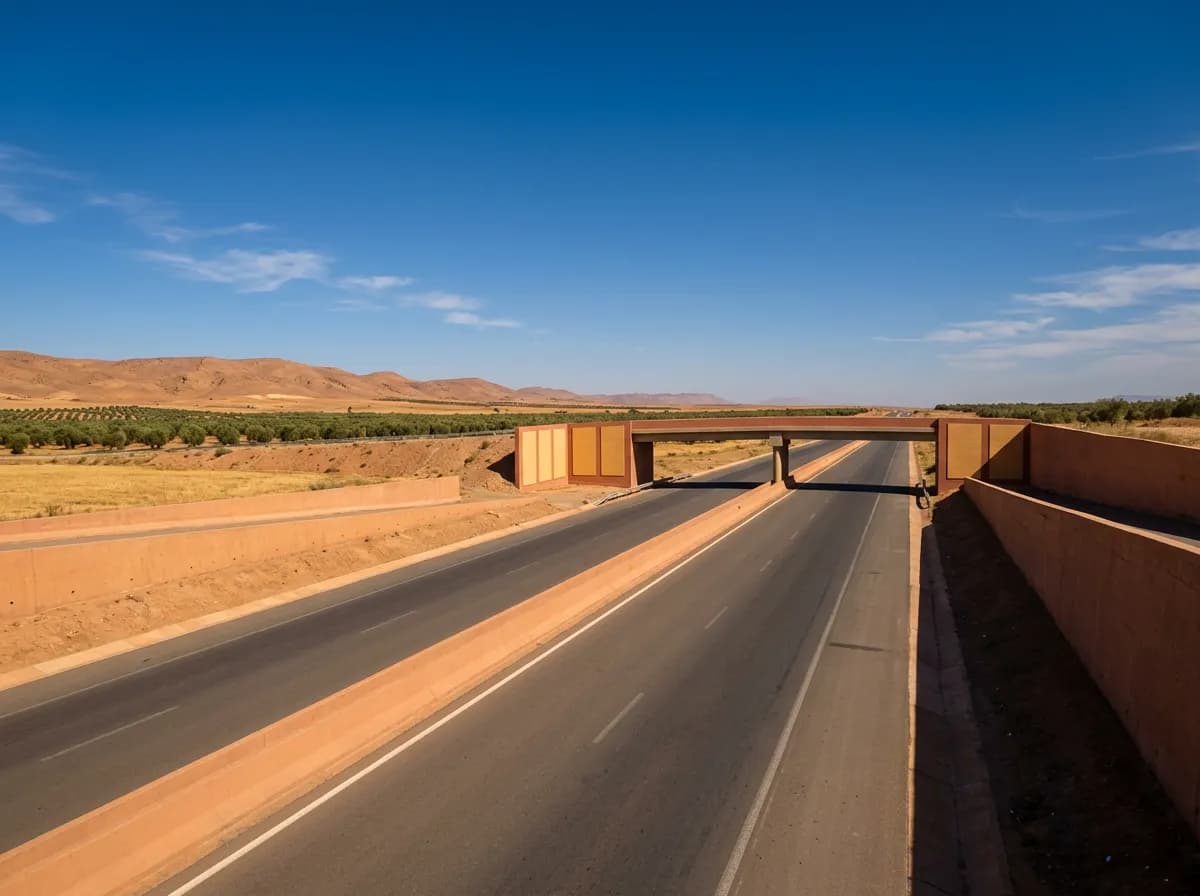
How far is Marrakech from Casablanca, and how long does it take?
| Distance | 240 km |
|---|---|
| Driving time | 2 h 40 |
| Road | A7 |
| Highest point | Sidi Bou Othmane, 480 m — a plateau, not a pass |
| Toll | Tolled for the full length, about 90 MAD for a standard car |
| Fuel stops | Skhour Rehamna (km 110), Berrechid (km 205) |
| Best season | Year-round — a flat plain route with no altitude and no seasonal closures |
How do you get from Marrakech to Casablanca?
There are four realistic options: drive yourself on the A7 in about two hours forty minutes, take an ONCF train in around three hours from 90 MAD, book a CTM or Supratours coach for roughly 100 MAD, or hire a private driver for about 1,000 MAD one way.
| Mode of transport | Duration | Cost | What it is worth |
|---|---|---|---|
| Self-drive | 2 h 40 without stops | Toll about 90 MAD plus fuel — around 220 MAD of diesel each way | Fastest door-to-door option and the only one that lets you stop in Ben Guerir or Settat on the way. |
| ONCF train | About 3 h | 90 MAD 2nd class, 135 MAD 1st class | Runs between Marrakech Gare and Casa Voyageurs throughout the day. No transfer needed once you land in the city centre. |
| CTM coach | 3 h – 3 h 30 | 90 – 110 MAD per seat | Air-conditioned and direct, but slower than the train once you count the wait at the terminus. |
| Supratours coach | 3 h – 3 h 30 | 95 – 115 MAD per seat | Departs from beside Marrakech train station. Same journey time as CTM. |
| Private driver | 2 h 40 plus stops | 900 – 1,200 MAD one way | Worth it for a single business meeting when you would rather work in the back seat than drive. |
If you are driving yourself, the A7 rewards a car built for steady motorway cruising rather than one built for tight streets. The whole 240 km sits at a constant 120 km/h with long straights and no gradient worth mentioning. An automatic gearbox removes the only tiring part of the drive — the repeated toll-booth stop-starts at Marrakech Sud, Skhour Rehamna and Casablanca Sud — and cruise control holds the limit through the flat stretch past Ben Guerir.
Planning the drive
What is the drive from Marrakech to Casablanca actually like?
It is a straight, flat motorway drive with nothing technical about it. The A7 has two lanes each way, a hard shoulder and barriers the entire distance. The only real variables are toll queues and traffic on the Casablanca ring road at the end.
The first 20 km leave Marrakech past the Palmeraie and the airport turn-off, then join the A7 at the Marrakech Sud toll gate. From here the road is dead straight for long stretches across the Rehamna plain.
Ben Guerir passes on the right at km 75, marked by the Mohammed VI Polytechnic University campus visible from the carriageway. There is no need to leave the motorway unless you are stopping there specifically.
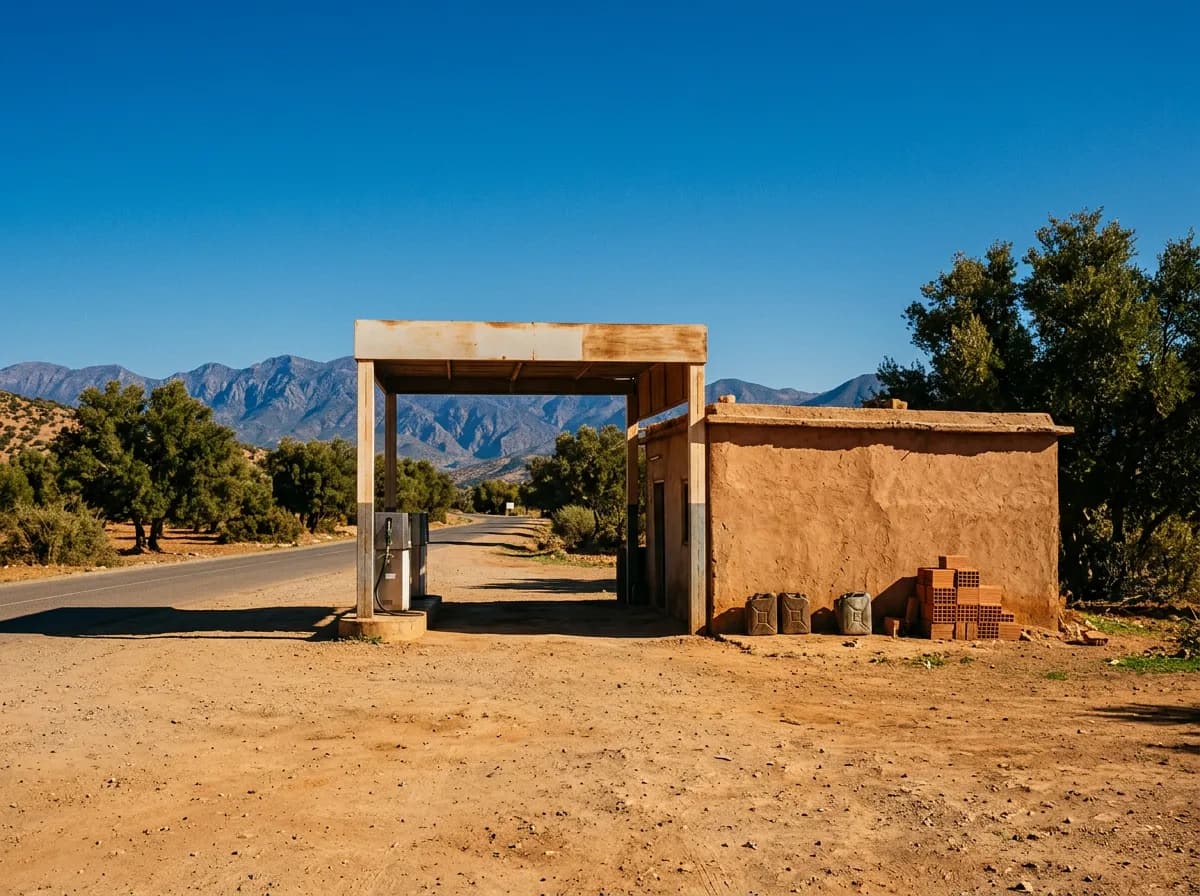
Skhour Rehamna, roughly the halfway point at km 110, has the only full service area on the route: fuel, a café and toilets. It is the sensible place to break a 2 h 40 drive into two shorter legs.
Settat appears at km 150, a regional capital of around 140,000 people and the last sizeable town before the coast. The motorway bypasses the centre entirely.
From Berrechid, at km 205, traffic thickens noticeably as Casablanca commuter routes join the A7. The final approach runs through the Casablanca Sud toll plaza into the Sidi Maarouf business district, about 20 minutes from the city centre in normal traffic.
Know before you go
- Speed cameras are fixed along the Rehamna plain, not just near the toll gates. The 120 km/h limit is enforced, not advisory.
- Toll booths at Marrakech Sud, Skhour Rehamna and Casablanca Sud queue badly on Friday afternoons and the first and last days of Eid holidays. Keep loose change or a bank card ready to save time in the manual lanes.
- Coastal fog forms on winter mornings between Berrechid and Casablanca, sometimes cutting visibility to under 100 m before 9 a.m. Slow down early rather than braking hard once inside it.
- Lorries use the outside lane on the flat stretch between Ben Guerir and Settat. Overtake decisively — there is no gradient forcing them to keep right the way there is on a mountain road.
- The last 15 km into Casablanca carry city commuter traffic from about 7 to 9 a.m. and 5 to 8 p.m. Time an afternoon arrival outside that window if the schedule allows it.
- Fuel is available at both ends and at Skhour Rehamna, but nowhere else on the motorway itself. Fill up before Ben Guerir if the tank is under a quarter.
What is worth stopping for between Marrakech and Casablanca?
Two stops justify a short detour off the A7: Ben Guerir for the Mohammed VI Polytechnic campus and its Al Maaden art park, and Settat for a working look at a Moroccan regional capital that tour buses skip entirely. Neither needs more than an hour.
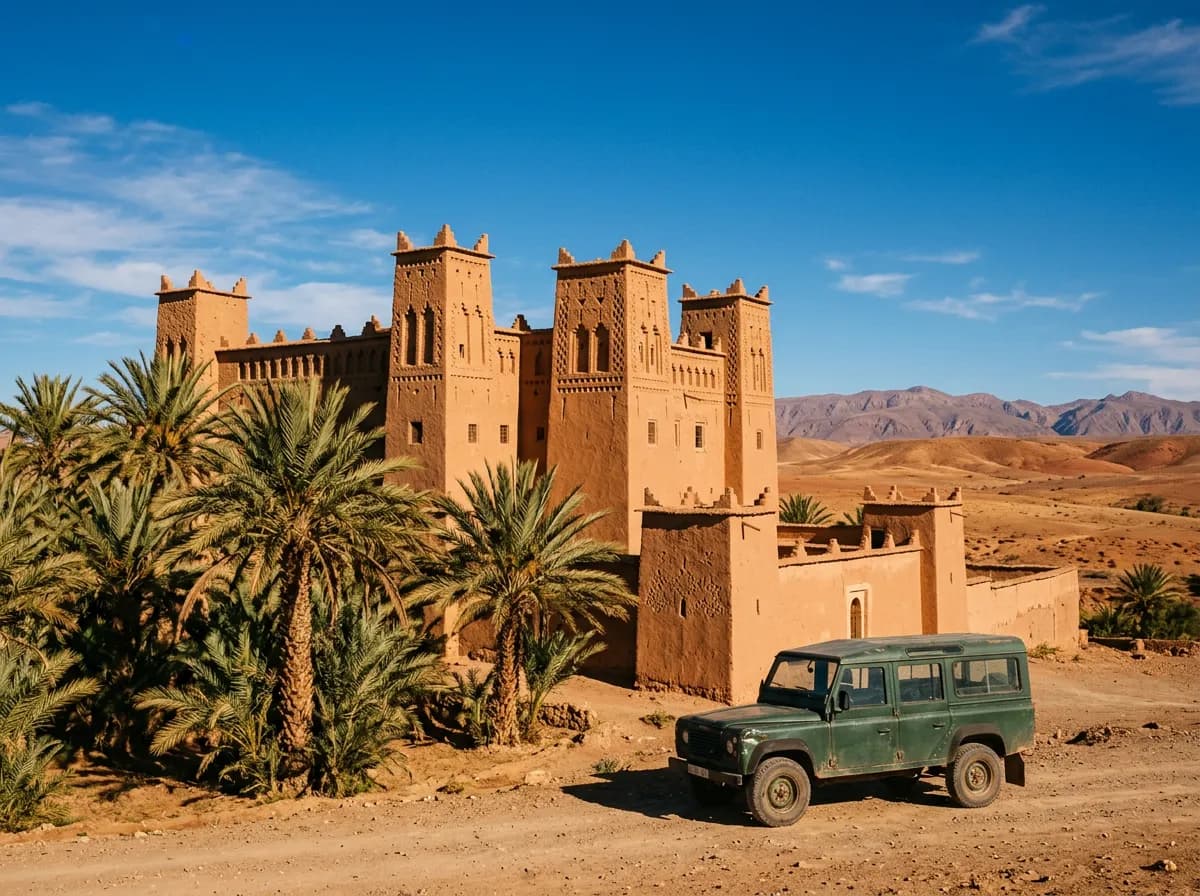
km 75
Ben Guerir
A phosphate town transformed since 2017 by the Mohammed VI Polytechnic University campus and the OCP green energy park beside it. The Al Maaden Art Park, an open-air sculpture garden, sits on the same site and is free to visit.
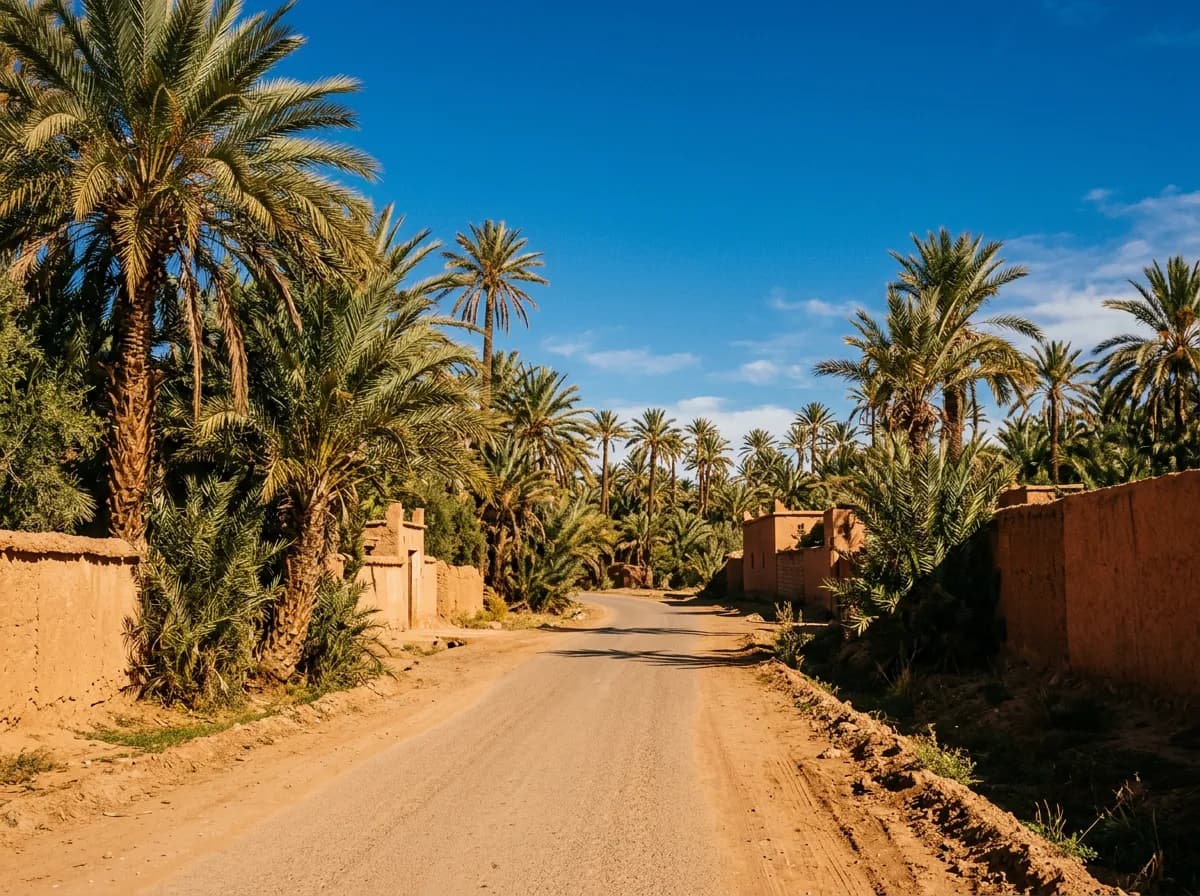
km 110
Skhour Rehamna service area
The only full service plaza on the motorway and the natural halfway break. Fuel pumps, a café terrace and clean toilets, with picnic tables under a row of planted trees.
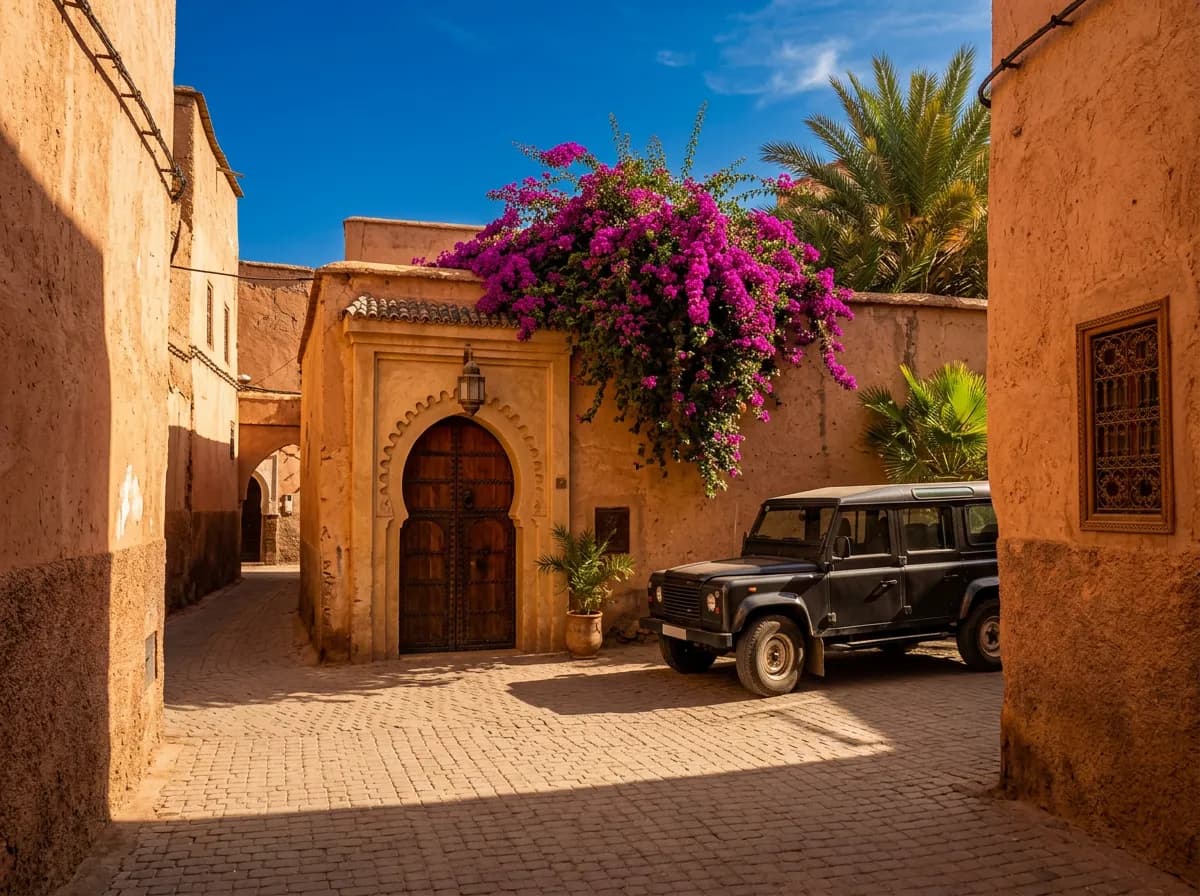
km 150
Settat
A regional capital of around 140,000 people, known for its livestock souk and the Chaouia agricultural plain around it. Leave the motorway at the Settat exit for a coffee in the town centre rather than the roadside services.
km 205
Berrechid
An industrial town on the last stretch before Casablanca, and the point where commuter traffic first joins the motorway. Its ceramics and glass factories supply much of the Casablanca construction trade.
km 240
Casablanca
The A7 ends at the Casablanca Sud toll plaza, feeding into the Sidi Maarouf business district. The Hassan II Mosque, on the Corniche, sits a further 20 minutes across the city and is worth the detour on a first visit.
How should you plan a day trip from Marrakech to Casablanca?
Treat it as a single working day, not a leisurely transfer. Leave Marrakech by 7 a.m., break at Skhour Rehamna, arrive in Casablanca by mid-morning, run the day's business, and set off back by 5 p.m. to avoid the evening exit traffic.
07:00 — Leave Marrakech
Join the A7 at Marrakech Sud before the morning commute builds. This slot also clears the Ben Guerir stretch before the day heats up.
08:15 — Break at Skhour Rehamna
Km 110, roughly the halfway point. Fifteen minutes for fuel and coffee splits the drive into two comfortable legs of about eighty minutes each.
09:40 — Arrive in Casablanca
Through the Casablanca Sud toll plaza and into Sidi Maarouf. Allow twenty minutes further if the destination is the city centre or the Corniche rather than the southern business district.
10:00 – 16:00 — Business or sightseeing
Sidi Maarouf and Casablanca Finance City hold most corporate offices; the Hassan II Mosque and the Corniche hold most of the sightseeing. Both sit on the same side of the city, twenty minutes apart.
17:00 — Leave Casablanca
Set off before the evening commuter surge reaches Berrechid and Settat, from 5.30 p.m. An earlier departure keeps the return drive close to two hours forty.
19:45 — Back in Marrakech
The return leg matches the outbound time almost exactly since the road is flat in both directions. No fuel stop is needed on the way back if the tank was filled at Skhour Rehamna.
Which Marrakesh Car Rental vehicle suits the drive to Casablanca?
An automatic saloon or compact is the natural choice: the A7 is flat and straight, so there is nothing a 4x4 does better here, and an automatic gearbox removes the fatigue of repeated toll-booth stops. Every car is collected and returned in Marrakech.
- Automatic Car Rental MarrakechBest all-round pick for the motorway. Cruise control and no gear changes over 240 km.
- Economy Car Rental MarrakechFine for two people with light luggage. From €25 a day on flat, sealed roads.
- Short-Term RentalRight fit for a same-day business trip and back.
- Long-Term Car Rental MarrakechFor repeated Casablanca trips across a longer stay in Marrakech.
- Car with Driver MarrakechFor a single meeting where working in the back seat beats driving.
- Marrakech Airport Car RentalCollect the car at Ménara on arrival before setting off for Casablanca.
What else do people ask about driving to Casablanca?
How far is Marrakech from Casablanca?
- 240 km by road on the A7 motorway. This is the fixed motorway distance; the direct straight-line distance is shorter, but no road follows it.
How long does the drive from Marrakech to Casablanca take?
- About two hours forty minutes without stopping. Allow three hours with one break at Skhour Rehamna. The train and coaches take around three hours including the terminus wait.
Is there a toll on the road from Marrakech to Casablanca?
- Yes. The A7 is a tolled motorway for its full 240 km, at about 90 MAD for a standard car. Toll gates sit at Marrakech Sud, Skhour Rehamna and Casablanca Sud.
Is the Marrakech to Casablanca drive difficult?
- No. It is a flat, straight dual carriageway with a 120 km/h limit and no gradient worth mentioning. The only friction points are toll queues and Casablanca's commuter traffic at the very end.
Can you drive to Casablanca and back in a day?
- Yes. Two hours forty each way leaves a full working day in Casablanca if you leave Marrakech by 7 a.m. and set off back before the 5.30 p.m. commuter surge builds around Berrechid.
Is the train or the car faster from Marrakech to Casablanca?
- The car is faster door to door — 2 h 40 against about 3 h on the train once the schedule and station transfer are counted. The train wins only if the destination sits right beside Casa Voyageurs station.