Guides & road trips · Imperial cities
Marrakech to Fes
Marrakech to Fes is 493 km by motorway and takes about five and a half hours. The route runs on the A7, A1 and A2 via Settat, Rabat and Meknes and crosses no Atlas pass. A slower alternative on the N8 climbs into the Middle Atlas instead.
- Distance
- 493 km
- Driving time
- 5 h 30
- Road
- A7, then A1 and A2 via the Casablanca and Rabat bypasses
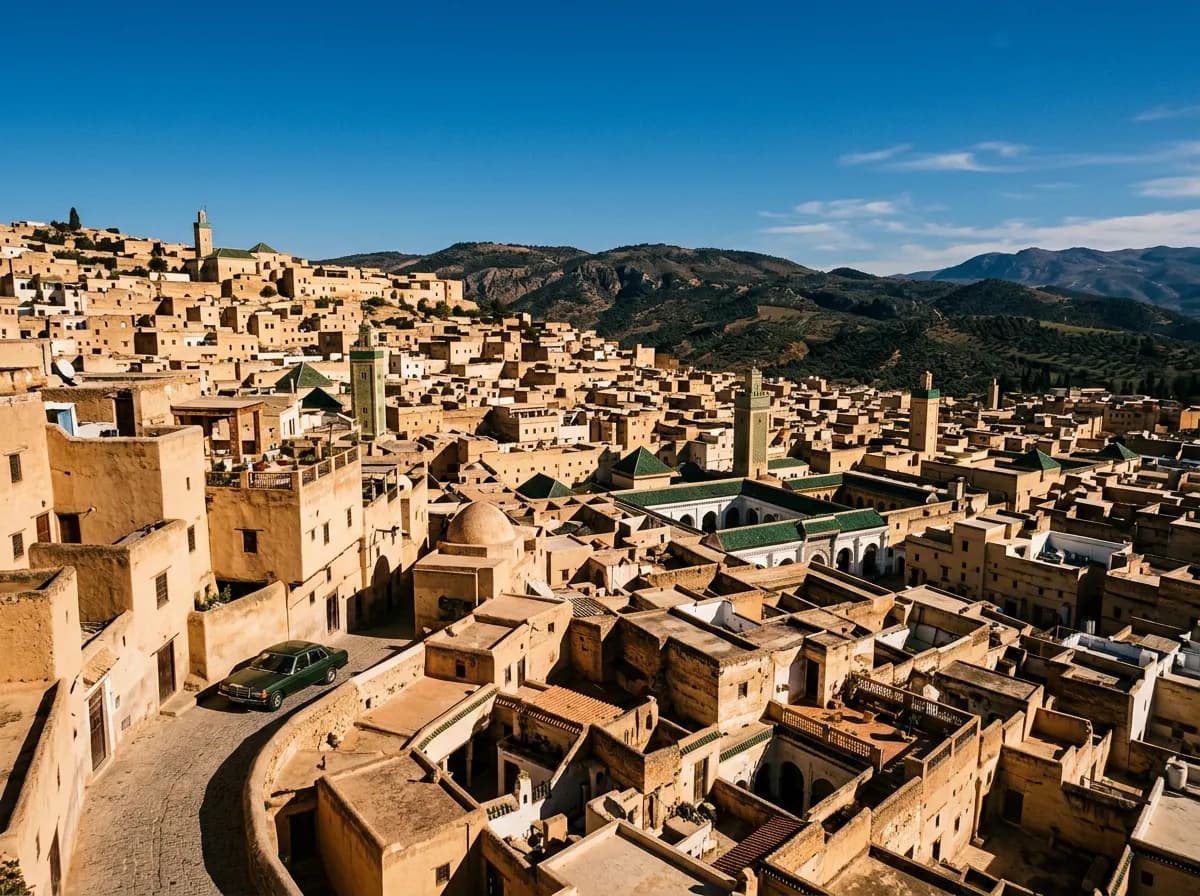
How far is Marrakech from Fes, and how long does it take?
| Distance | 493 km |
|---|---|
| Driving time | 5 h 30 |
| Road | A7, then A1 and A2 via the Casablanca and Rabat bypasses |
| Highest point | Zemmour plateau near Khemisset, about 700 m — no Atlas pass on this route |
| Toll | About 210 MAD one-way for a car (class 1, full A7/A1/A2 run) |
| Fuel stops | Service areas at Settat, Berrechid and Khemisset |
| Best season | Year-round; avoid arriving in Fes at dawn between December and February, when fog settles over the Saïss plain |
How do you get from Marrakech to Fes?
Five options: drive the motorway in 5 h 30 or the Middle Atlas N8 in 7 h, take the ONCF train in 7 h, book a CTM or Supratours coach for around 200 MAD, or hire a private driver for about 3,200 MAD one way.
| Mode of transport | Duration | Cost | What it is worth |
|---|---|---|---|
| Self-drive (motorway) | 5 h 30 without stops | About 640 MAD each way — diesel plus roughly 210 MAD in tolls | Fastest and most flexible. The only option that lets you turn off for Volubilis and Moulay Idriss Zerhoun. |
| Self-drive (Middle Atlas, N8) | 7 h | About 600 MAD of diesel each way, no tolls | Slower but scenic — Beni Mellal, Khenifra, Azrou and the cedar forest above Ifrane at 1,650 m. |
| ONCF train | About 7 h | 180 – 260 MAD (2nd / 1st class) | Cheap and comfortable, but both stations sit outside the old medinas — budget for a taxi at each end. |
| CTM / Supratours coach | 7 h – 7 h 30 | 180 – 230 MAD per seat | The cheapest door-to-door option, departing from Marrakech's Bab Doukkala terminal. |
| Private driver | 5 h 30 plus stops | 3,000 – 3,800 MAD one way | Worth it for a group splitting the fare, or for adding Volubilis without driving 493 km yourself. |
A drive this length puts real kilometres on the clock, and Marrakesh Car Rental's unlimited-mileage policy covers all of it without a surcharge — only the equipped 4x4 for desert routes is capped, at 250 km a day. The motorway itself asks little of the car: two lanes, a 120 km/h limit and gradients that never exceed the gentle rise over the Zemmour plateau. Choose the vehicle for five and a half hours in the seat, not for the road surface — cruise control and a comfortable driving position matter more here than ground clearance.
Planning the drive
What is the drive from Marrakech to Fes actually like?
It is five and a half hours of motorway, not a mountain crossing. The A7, A1 and A2 stay below 700 m for the whole route, so the driving is monotonous rather than technical — the main task is concentration over a long, straight road.
The first 145 km run north through the Rhamna plain to Settat: flat wheat country, wind turbines on the ridgelines to the west, and new tarmac — this stretch of the A7 opened in 2018.
At Settat the road joins the bypass around Casablanca rather than the city centre. Stay in the through lane and follow signs for Rabat and Fès; missing the fork funnels you into Casablanca's evening traffic. The Rabat bypass, 95 km further on, carries the heaviest congestion of the whole route, especially on Friday afternoons.
North of Rabat the A2 crosses the Zemmour plateau, a low tableland of cork oak and cereal fields and the only rise on the entire route, at about 700 m. Meknes appears 433 km in, its Bab Mansour gate visible from the motorway exit.
The last 60 km cross the Saïss plain, Morocco's main cereal basin, with the Middle Atlas visible to the south. Volubilis and Moulay Idriss Zerhoun sit a short detour off the motorway here, reached via the P4402.
Fes announces itself with the new town's wide boulevards well before the old city. Bab Boujloud, the blue-and-green gate into Fes el Bali, is a further 15 minutes through traffic from the motorway exit.
Know before you go
- The motorway speed limit is 120 km/h and radar-enforced; fixed and mobile units operate on all three sections (A7, A1, A2).
- Toll barriers take cash in MAD and bank cards on the main gates. Keep small notes for the smaller Berrechid and Khemisset barriers, which are cash-only.
- The Casablanca and Rabat bypasses see heavy traffic on Friday afternoons and the eve of public holidays. Leave Marrakech before 07:00 to clear both before the build-up.
- Fog is common on the Saïss plain approaching Fes between December and February and clears by mid-morning. Reduce speed on the final 30 km if visibility drops.
- Fuel is available at every motorway service area, so there is no equivalent of the fuel-free stretch over the Tizi n'Tichka on this route.
- The exit for Fes feeds directly into dense new-town traffic. Slow down well before the toll gate rather than braking hard after it.
What is worth stopping for between Marrakech and Fes?
Two stops justify the detour: Meknes, an imperial city 60 km short of Fes, and Volubilis, the Roman ruins 30 km further north. Both sit a short drive off the motorway and turn a five-and-a-half-hour transfer into a full day.
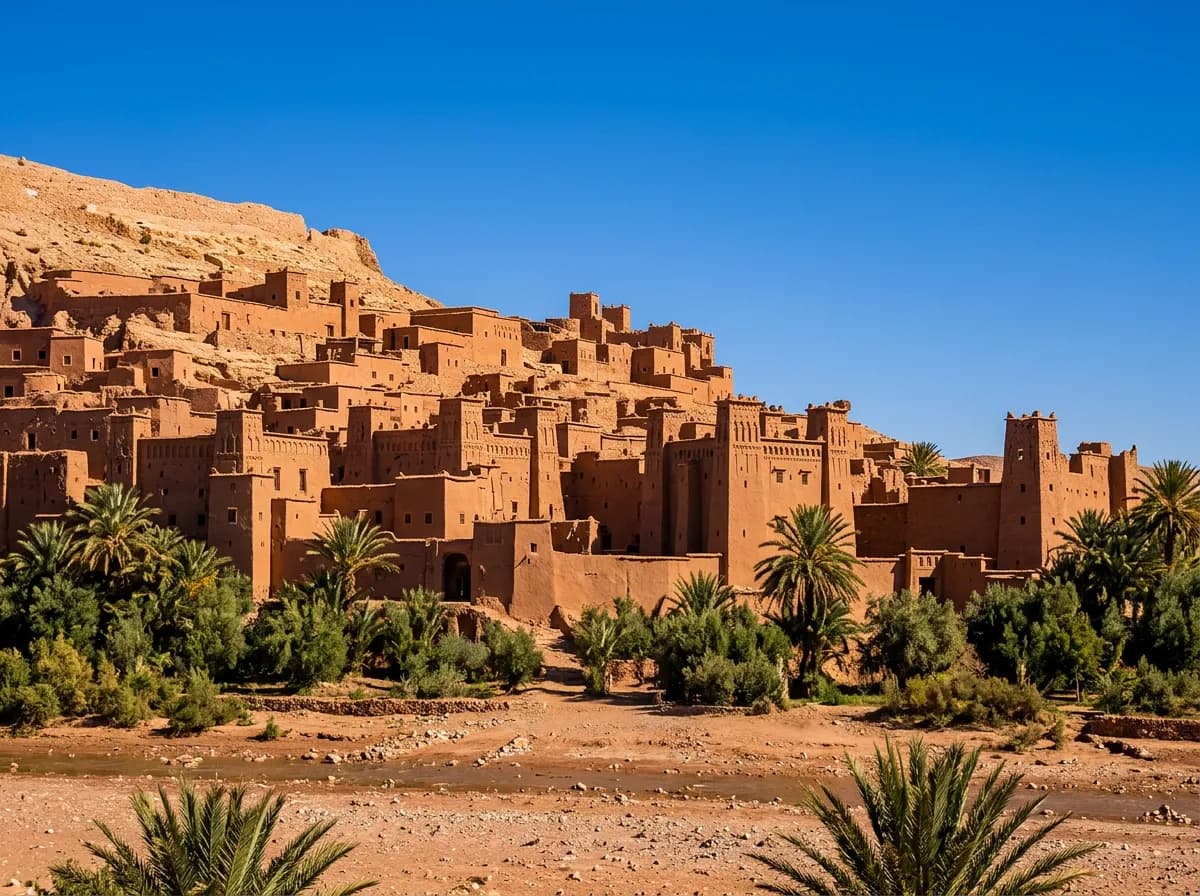
km 145
Settat
The last town on the plain before the Casablanca bypass and the cheapest fuel on the route. A working agricultural town rather than a sight — stop for the tank and the coffee, not the scenery.
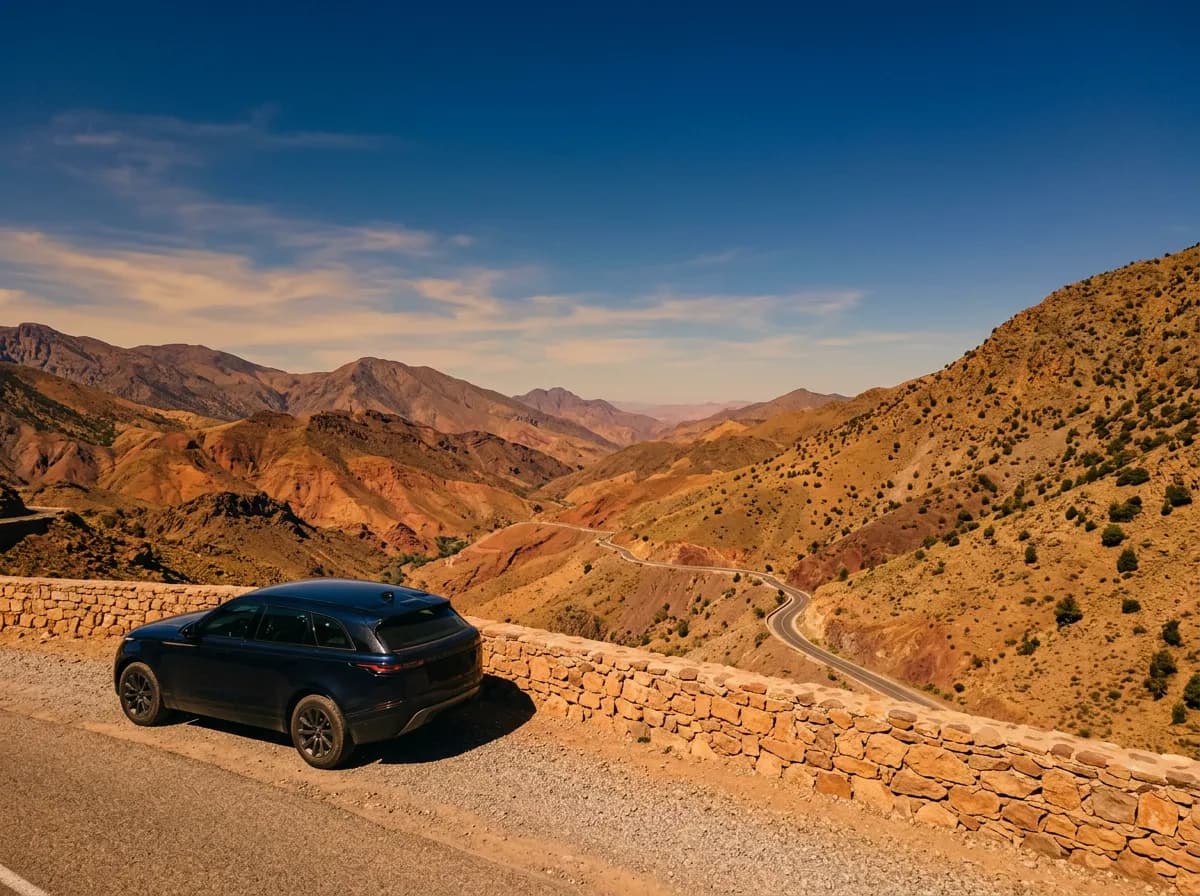
km 240
Rabat bypass
The capital's ring road, with the Bou Regreg river and the Hassan Tower visible to the west from the motorway. Not a stop in itself, but the point where traffic thickens most on the whole run north.
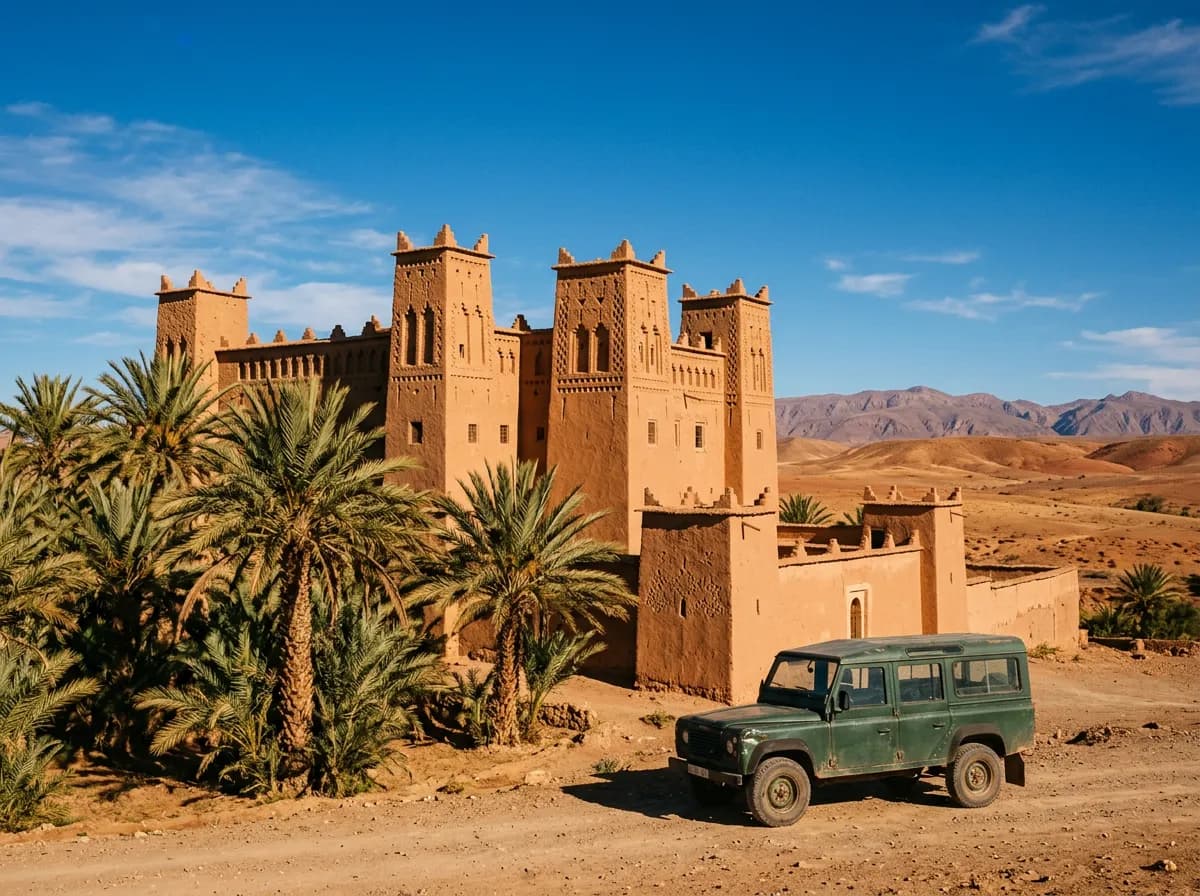
km 433
Meknes
An imperial city built by Moulay Ismail in the late 17th century. Bab Mansour, the monumental gate on Place El Hedim, is visible from the motorway exit. Sixty kilometres short of Fes and worth a two-hour stop.
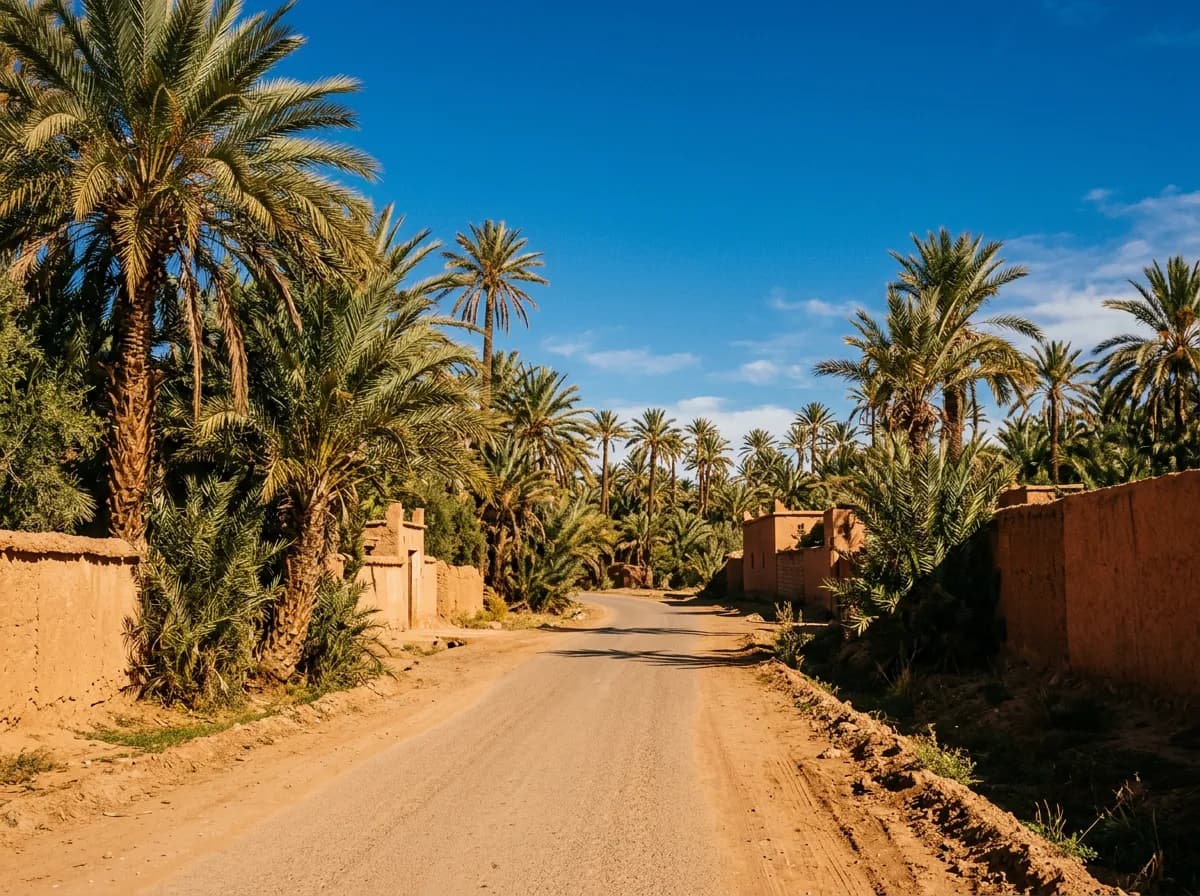
km 448
Volubilis
A Roman provincial capital abandoned in the 11th century, 15 km north of Meknes off the P4402. Mosaic floors and the Triumphal Arch of Caracalla survive in the open air. A UNESCO World Heritage Site since 1997. Allow ninety minutes.
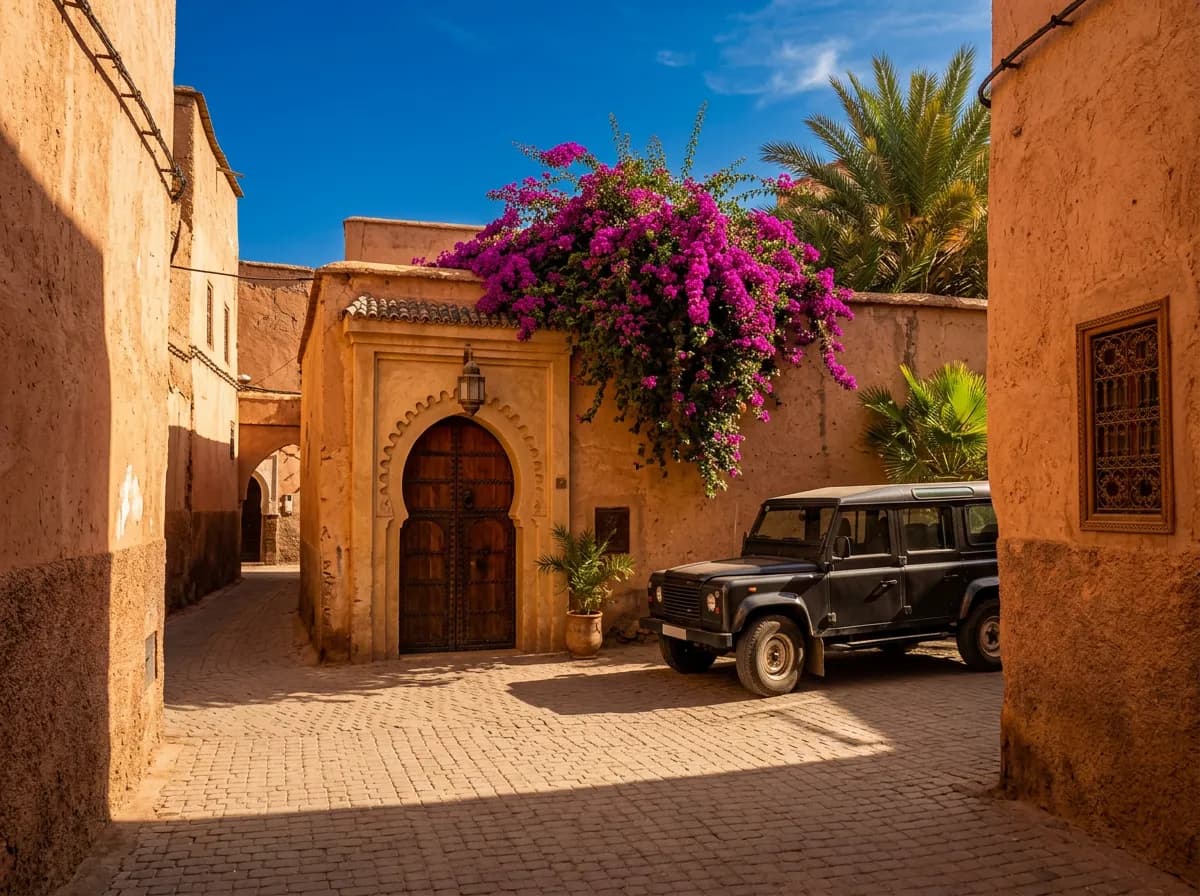
km 452
Moulay Idriss Zerhoun
A hill town five kilometres from Volubilis, founded by Moulay Idriss I in 789 as Morocco's first Islamic capital. Green-roofed shrines cover the hillside above the Khoumane valley. Allow thirty minutes for the viewpoint alone.
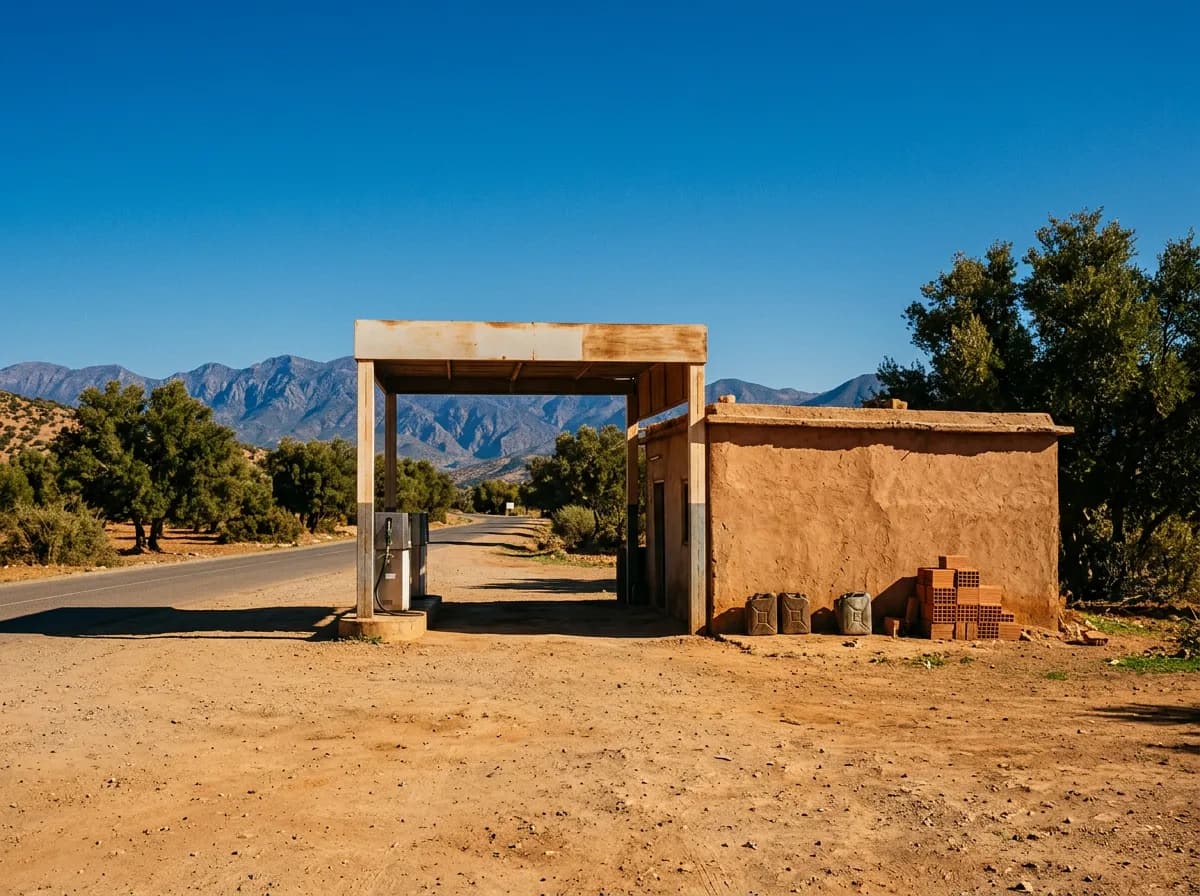
km 493
Fes
Bab Boujloud, the blue-and-green tiled gate, opens onto Fes el Bali, the world's largest contiguous car-free urban area at roughly 9,000 alleys. Fes is the junction for Chefchaouen, Meknes and the Middle Atlas towns.
How should you plan the drive from Marrakech to Fes?
Treat it as a full day, not a transfer. Leave Marrakech by 7 a.m., break at Settat, reach Meknes for a two-hour stop around midday, detour to Volubilis and Moulay Idriss Zerhoun in the afternoon, and arrive in Fes before dark.
07:00 — Leave Marrakech
Head out on the A7 past the Rhamna plain. Fill the tank in the city before you leave — the first fuel stop, at Settat, is 145 km out.
09:15 — Break at Settat
Km 145. Fuel, coffee and the last cheap petrol before the Casablanca and Rabat bypasses. Ten minutes is enough.
12:00 — Meknes
Km 433. Park near Place El Hedim and walk through Bab Mansour into the medina. Two hours covers the gate, the mellah and lunch.
14:30 — Volubilis and Moulay Idriss
Fifteen minutes off the motorway via the P4402. Ninety minutes at the Roman ruins, then five minutes further to the viewpoint over Moulay Idriss Zerhoun.
17:00 — Arrive in Fes
Sixty kilometres back to the motorway and on to Fes. Park outside Bab Boujloud — Fes el Bali itself takes no cars — and walk in before the light goes.
Next day — Fes el Bali
Fes rewards a full day on foot: the Bou Inania madrasa, the Chouara tanneries and the university quarter are all inside the walls. Chefchaouen and the Rif lie north; Meknes and the Middle Atlas towns are a short return south.
Which Marrakesh Car Rental vehicle suits the drive from Marrakech to Fes?
An automatic saloon or compact SUV is the natural choice. Five and a half hours of steady motorway driving rewards cruise control and a comfortable seat far more than ground clearance, which this route never tests.
- Automatic Car Rental MarrakechCruise control removes the clutch work over 493 km of motorway.
- Economy Car Rental MarrakechFrom €25 a day for two people travelling light.
- 7-Seater Car Rental MarrakechSeats up to seven. The whole route is sealed road, so capacity matters more than clearance.
- 4x4 & SUV Rental MarrakechWorth it only if continuing onto the Middle Atlas N8 route through Ifrane at 1,650 m.
- Car with Driver MarrakechA 493 km transfer with a licensed driver, useful for a one-way trip ending in Fes.
- Long-Term Car Rental MarrakechFor a circuit taking in Marrakech, Fes and the imperial cities over a week or more.
What else do people ask about driving to Fes?
How far is Marrakech from Fes?
- 493 km by motorway on the A7, A1 and A2. The alternative N8 through the Middle Atlas via Beni Mellal and Ifrane covers a similar distance but takes longer.
How long does it take to drive from Marrakech to Fes?
- About five and a half hours on the motorway without stopping. The Middle Atlas route via Ifrane takes around seven hours. Trains and coaches also take roughly seven hours.
Is there a toll between Marrakech and Fes?
- Yes. The full A7/A1/A2 run costs about 210 MAD one-way for a car. This is unlike the route to Ouarzazate, where the N9 over the Tizi n'Tichka is toll-free.
Is there a direct train from Marrakech to Fes?
- Yes. ONCF runs direct services taking about seven hours, priced from 180 to 260 MAD depending on class. Both stations sit outside the old medinas, so a taxi is needed at each end.
Can you drive Marrakech to Fes and back in a day?
- Physically yes — eleven hours of driving there and back. It leaves almost no time in Fes itself. An overnight in Fes or Meknes makes far more sense than a same-day return.
Is the motorway or the Middle Atlas road better to Fes?
- The motorway is faster by about ninety minutes and has no mountain driving. The Middle Atlas N8 through Khenifra, Azrou and Ifrane costs no toll and adds cedar forest and altitude, at the price of a longer, more technical drive.